LIMITED TIME OFFER · APPLICABLE FROM THIS PAGE ONLY
After She Left, Nobody Was Reminding Me About My Kidney Numbers. So I Started Writing Them Down.
A TryHaritaki story

Composite: written from what men over 60 with stage 3 kidney disease tell us. Not one real person and not a testimonial.
She kept the appointments, the pill box and the questions. When she was gone, I found out how much of it I'd left to her.
After she left, it was just me and the calendar.
I started writing things down, the way she used to.
This is that notebook.
January
The calendar on the fridge stopped at the month she left. My nephrologist appointment was on there in her handwriting. I nearly missed it.
February Stage 3. eGFR a little lower than last time. "Let's keep an eye on it." I asked, for once, whether it was a bad number or a trend. He said too early to tell. Recheck in three months.
"Let's recheck in 3 months."
"Not surprising for your age."
"My goal is stability for as long as possible."
March
The renal diet sheet. Less salt, watch the potassium, ask about protein. I'd never cooked for myself. I learned three meals and kept them simple.
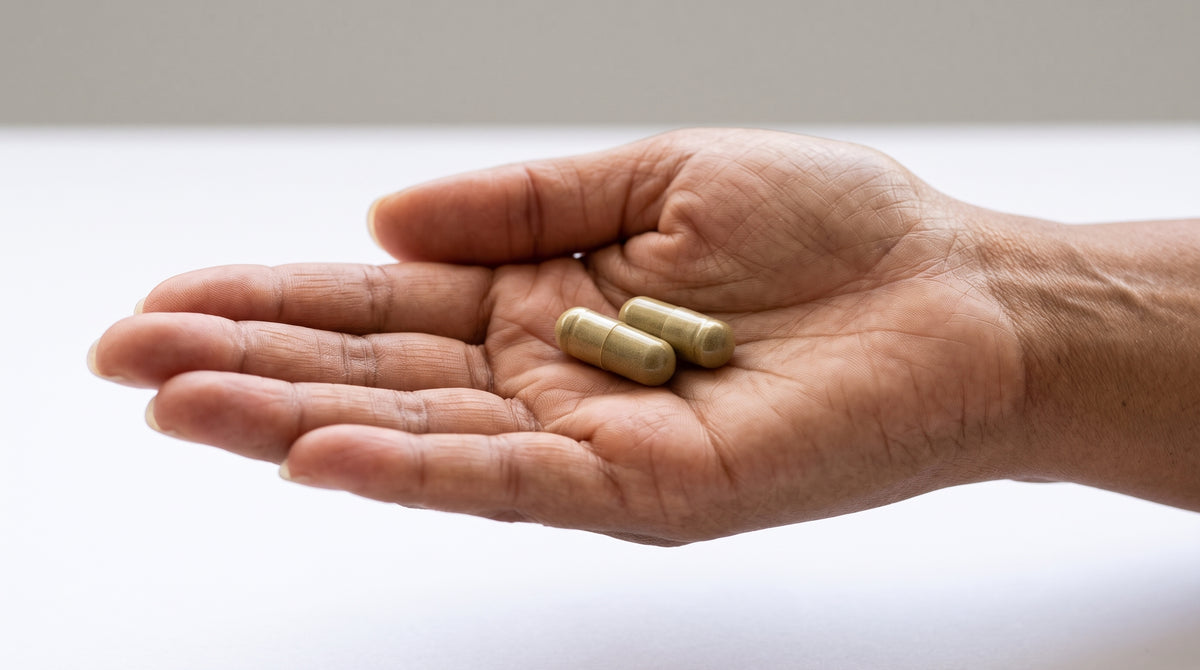
April I wanted one thing I could do every day that didn't depend on anybody reminding me. I showed my doctor a one-ingredient label. Haritaki, two capsules with breakfast.


In a lab study, researchers put kidney cells in a dish, and the haritaki extract protected them from oxalate damage. In a separate study in rats, the authors say the kidneys of the rats given the fruit were better protected than the untreated rats. These were lab and animal studies of the fruit, not studies of people or of our pouch.
May
Recheck done. I wrote the number on the fridge calendar under hers. My goal now is stability for as long as possible, and to keep living on my own terms.
What is on the label
• One ingredient: wild haritaki fruit, harvested in the Himalayas.
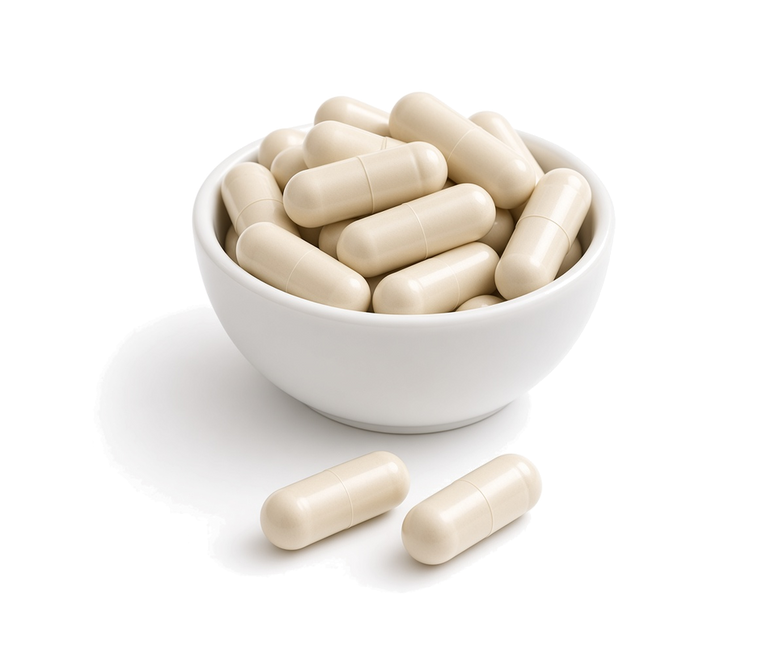
• 3x concentrated, 1,000 mg in two capsules.
• Natural polyphenols: chebulagic, gallic and ellagic acid.
• Third-party lab tested in the US.

Blends with a dozen herbs.
Powder blends.
Synthetic stacks. Doing nothing.
This is the part I wasn't ready for.
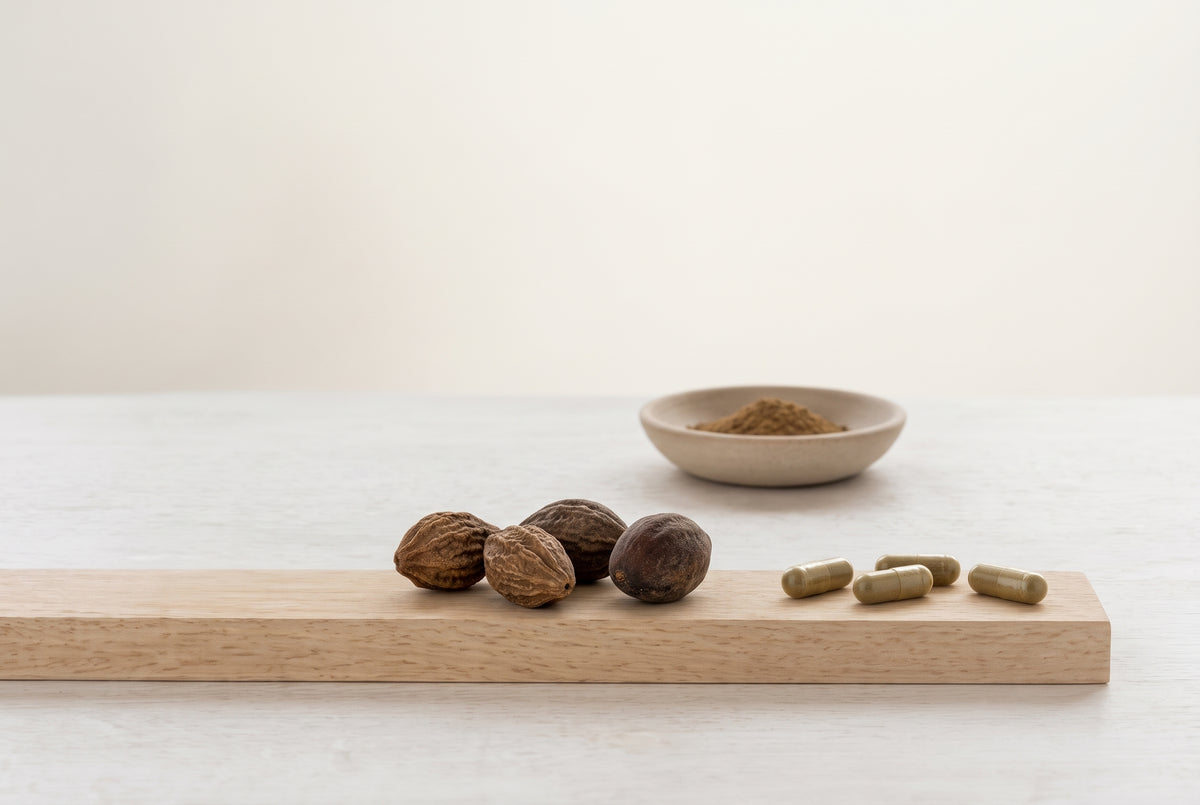
It's called haritaki.
And it's not a passing trend.
Not quite.
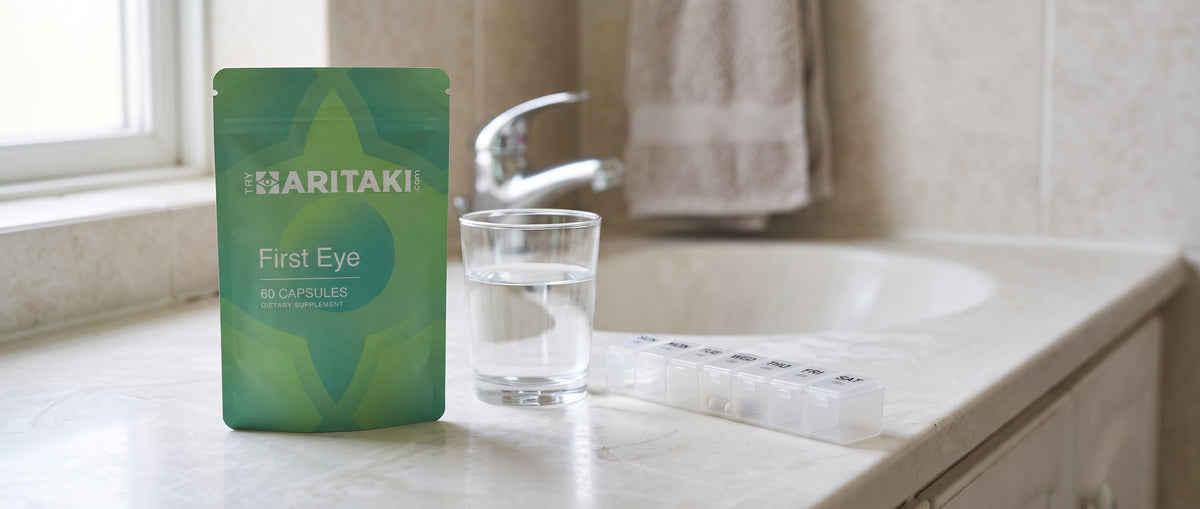
One ingredient.
What's in the pouch
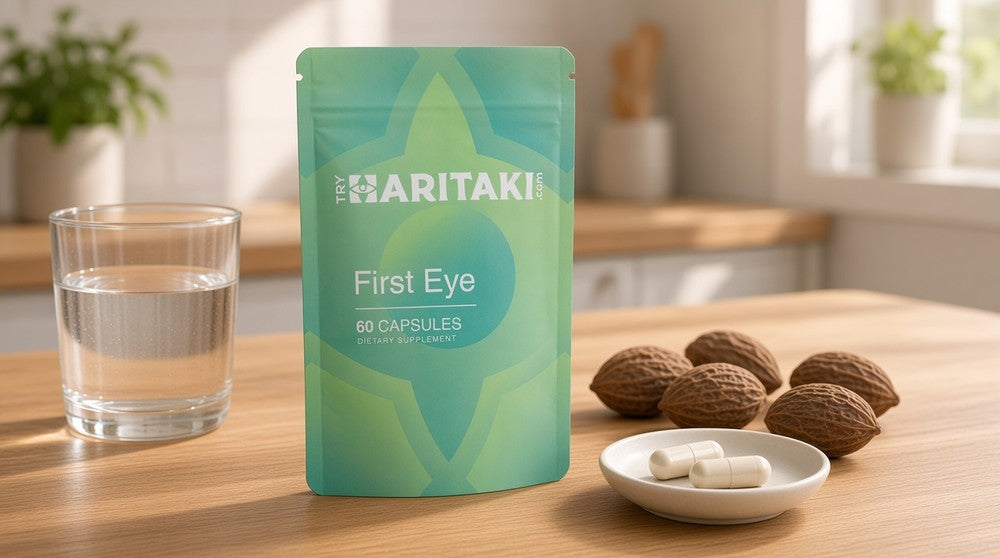
One ingredient: wild haritaki fruit, harvested in the Himalayas. Pure, wild-harvested Terminalia chebula. Ayurveda has called it the "King of Medicines" for generations.
3x concentrated, so two capsules a day is the whole routine. 60 capsules in a pouch = 30 days.
Third-party lab tested in the US. Not sold on Amazon.
More than 75,000 customers have made it part of their mornings.
In the hospital.
In the hospital.
At home.
99 days to decide
Every order is covered by our 99-day money-back guarantee. If it is not for you, email us for a full refund.
That felt like the right way.
Two options. Pick one.
A)
Keep waiting for the next recheck and hoping it holds.
B)
Try haritaki risk-free for 99 days, and tell your doctor what you take.
When you order:
When you order:
1)
2)
2 capsules a day · one pouch (60 capsules) = 30 days
3)
99-day money-back guarantee
Buy 1 Bag $29.99 (compare $49.99)
Buy 2, Get 1 FREE $57.98 ($19.30/bag)
Buy 3, Get 2 FREE $86.97 ($17.40/bag)
Refills every 4 weeks at $39.99/ea · Skip, pause, or cancel anytime
99-day money-back guarantee. Try it for 99 days. If you're not happy, you get your money back.
Claim Buy 2 Get 1 FREE →
Trusted by 75,000+ customers.
CLAIM BUY 2 GET 1 FREE

Good to know: TryHaritaki is wild-harvested once a year in the Himalayas. Our Buy 2, Get 1 Free offer is available from this page.
DEAL OF THE DAY: TryHaritaki · Buy 2, Get 1 Free
NOTE: This offer is not available on Amazon or in stores.
A composite story. Individual experiences vary; this is not medical advice.
If you are pregnant or breastfeeding, take medication, or have a medical condition, talk to your doctor or pharmacist before starting any supplement. Tell them everything you take.
*These statements have not been evaluated by the Food and Drug Administration. This product is not intended to diagnose, treat, cure, or prevent any disease.
Zhang M, et al. (2024). Comprehensive Review on Fruit of Terminalia chebula: Traditional Uses, Phytochemistry, Pharmacology, Toxicity, and Pharmacokinetics. Molecules, 29(23), 5547.
Ratha KK, Joshi GC (2013). Haritaki (Chebulic myrobalan) and its varieties. Ayu, 34(3), 331-334.
Hu J, et al. (2023). Simultaneous quantitative analysis and in vitro anti-arthritic effects of five polyphenols from Terminalia chebula. Frontiers in Physiology, 14, 1138947.
DEAL: TryHaritaki · Buy 2 Get 1 FREE
DEAL: TryHaritaki · Buy 2 Get 1 FREE
CLAIM BUY 2 GET 1 FREE